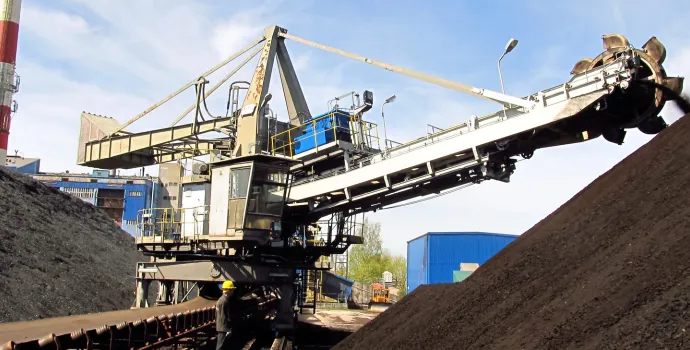
Objects of the mining industry and mineral processing: quarry equipment, mine equipment, processing plants, conveyor systems, galleries and tanks — are operated in aggressive conditions: intense abrasive impact, high humidity, temperature fluctuations, ultraviolet radiation. Depending on their purpose and location, facilities may be exposed to stone dust, acidic mine water, and aggressive chemical reagents at the beneficiation stages.
These operating features impose increased requirements on anticorrosion protection and coatings.
Our solutions are applicable for protecting:
- metal and concrete structures of processing plants, trestles and conveyor galleries;
- quarry and mine special equipment, equipment at various processing stages;
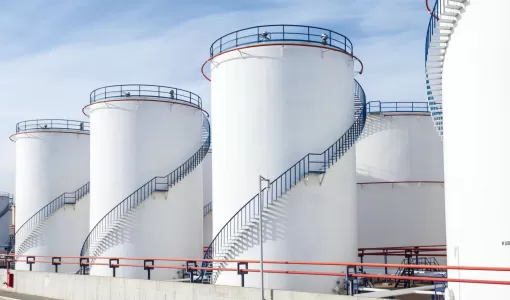
- pipelines, process tanks, transfer units, bins and screens;
- auxiliary structures and engineering elements exposed to aggressive abrasive and chemical environments.
Coatings are designed for operation in various macroclimatic regions and provide anticorrosion protection under corrosion activity conditions from C2 to C5, CX in accordance with GOST 34667.2-2020 (ISO 12944-2:2017). Materials can be used year-round subject to application requirements.
Standard Solutions
Chemie ARMOR® — Industrial and Protective Coatings That Truly Work
LLC “Art Industry Company” (Belarus) is the manufacturer of Chemie ARMOR® anti-corrosion coatings. We develop, produce, and implement advanced solutions for protecting metal structures and equipment from corrosion, as well as atmospheric and mechanical impacts. Our materials, created using cutting‑edge technologies and 30 years of expertise, ensure durability, reliability, and reduced maintenance costs.


Our specialists can provide you with qualified assistance in selecting the right coating system
You can request a callback by clicking the button below, or contact us in one click by pressing the button of any convenient messenger on the panel to the right.
FAQ
Fast-drying and winter-grade Chemie ARMOR modifications are adapted for application at negative temperatures (in accordance with the material TDS) and under high relative air humidity. The main technological limitation is compliance with the “dew point” rule: the metal surface temperature must be at least 3 °C above the dew point temperature to prevent condensation, which impairs adhesion.
The choice of dry film thickness (DFT) directly depends on the corrosion activity category of the environment according to ISO 12944 (GOST 34667), the type of mechanical loads, and the required service life of the coating. Contact our specialists for advice.
- By a dense polymer network: chemical crosslinking of the matrix effectively resists shear loads and abrasion.
- By the use of hard fillers: glass flakes take mechanical impacts upon themselves.
- By a damping effect: modifiers impart elasticity to the epoxy film, allowing it to spring back under impacts without chipping.
For such tasks, combined systems are recommended: an epoxy primer/intermediate layer provides barrier protection against moisture and wear, and an acrylic-polyurethane enamel is applied as the topcoat. The acrylic-polyurethane finish has high UV resistance, prevents chalking and cracking of the coating system, preserving its protective and decorative properties for 15 to 25 years.
Roughness (surface profile) is a basic condition for ensuring adhesion of Chemie ARMOR thick-film coatings operating under high loads.
- Increased bonding area: abrasive blasting forms a microprofile that increases the actual contact area between the liquid paint and metal several times compared with a smooth surface.
- Optimal parameters: for Chemie ARMOR wear-resistant epoxy systems, Rz 70–80 µm and an angular profile (Grit) are recommended.
Insufficient roughness leads to coating chipping under impacts, while excessive roughness (over 100 µm) creates a risk that the coating thickness above the peaks will be insufficient.