The Influence of Surface Preparation on Coating Durability Using the Example of Expensive and Budget Paints and Coatings
When choosing paint and coating materials for metal protection, the customer often compares products primarily by price and declared characteristics. A more expensive paint and coating material is perceived as a way to obtain a more durable coating, while a budget material is seen as a solution with a shorter service life.
In industrial painting, this relationship is not direct.
Any paint and coating material is applied to a specific substrate, and its performance properties depend not only on the formulation but also on the condition of the surface, the degree of its cleanliness, roughness, application conditions, and coating formation.
It is possible to use a technologically complex and expensive system but obtain an unsatisfactory result if it is applied to contaminated metal or to loosely bound corrosion products. Conversely, a material from a more affordable price segment, with proper surface preparation and adherence to technology, can provide the required level of protection for a specific task.
This does not mean that expensive paint and coating materials have no advantages. High-performance coatings are created to solve more complex tasks and can provide increased chemical, atmospheric, or mechanical resistance. But these properties can only be realized with a properly prepared substrate.
Therefore, when assessing coating durability, it is necessary to consider not the price of the paint and coating material separately, but the entire technological chain:
metal condition → surface preparation → paint and coating system → application technology → operating conditions.
Problem Statement and Why This Matters
Potential and Actual Coating Service Life Are Not the Same Thing
The technical documentation for a paint and coating material describes the properties of the material under specified application conditions. This can be called the potential of the material.
On a real object, this potential must be realized technologically.
If the surface is prepared in accordance with the system's requirements, the necessary application conditions are ensured, and the required film thickness is formed, the properties of the material can manifest fully.
If, however, contamination, loose rust, or a poorly bonded old layer remains between the metal and the coating, the actual service life may be significantly lower than expected.
This is precisely why the characteristics of an expensive paint and coating material cannot be automatically transferred to the finished coating. Between the material in the factory container and the protective system on a metal structure, there are several technological stages, each of which affects the result.
What Remains on the Metal Surface Before Painting
Depending on the condition of the structure, the metal may have:
- mill scale;
- rust and corrosion products;
- old paint and coating materials;
- oils and lubricants;
- salts;
- dust;
- industrial contaminants;
- moisture.
Some of these contaminants prevent direct contact between the coating and the metal.
Soluble salts are especially dangerous. They can remain on the surface even after visually satisfactory cleaning. When moisture penetrates under the coating, salts create conditions conducive to the development of corrosion processes.
Therefore, a visually clean surface does not always mean a technologically prepared substrate.
Adhesion Begins with Substrate Preparation
One of the main requirements for a protective coating is strong adhesion to the substrate.
If contamination or a loosely bound layer of corrosion products is present between the metal and the paint and coating material, the coating is actually held not on the metal but on an intermediate weak layer.
Under the influence of moisture, temperature, and mechanical loads, such a boundary becomes a potential zone of failure.
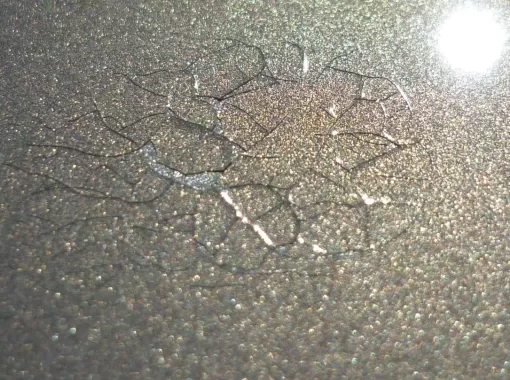
Further development of the process may manifest as:
- blistering;
- cracking;
- peeling;
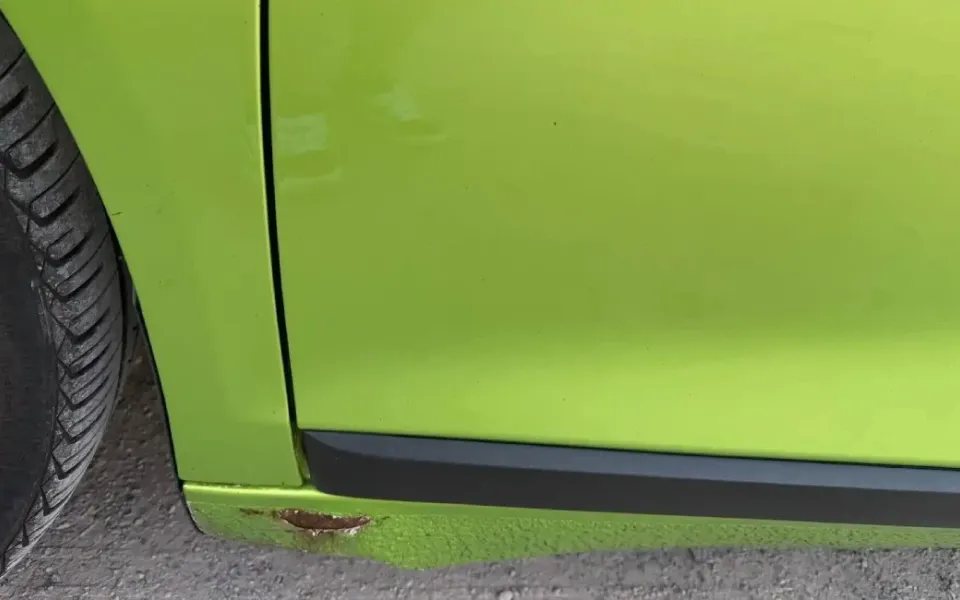
- underfilm corrosion;
- spreading of corrosion from damaged areas.
And at this point, it practically no longer matters how high the initial cost of the finish enamel was.
Expensive Paint and Coating Material on a Poorly Prepared Surface
Let us consider the first scenario.
A high-performance system designed for increased atmospheric or chemical exposure is applied to a metal structure. The material has a high-quality binder, special pigments, and high resistance indicators.
But surface preparation has been performed insufficiently thoroughly.
In this case, the potentially strong link of the system becomes the film itself, and the weak link is the contact between the coating and the metal.
If a corrosion process begins under the coating or adhesion loss occurs, the high chemical resistance of the finish enamel no longer solves the problem.
The result is a paradoxical situation: money was paid for the expensive material, but its advantages could not be realized due to a technological defect at the previous stage.
Budget Paint and Coating Material on a Properly Prepared Surface
Now let us consider the opposite scenario.
A more affordable material is used, whose characteristics correspond to the operating conditions. The metal is cleaned to the required degree, contaminants are removed, a suitable surface profile is formed, application conditions and the specified dry film thickness are observed.
In this case, the material works under the conditions envisaged by the manufacturer.
Such a coating does not become equivalent to a high-performance system merely because of quality preparation. If the object requires high chemical resistance or long-term operation in a severe environment, the budget paint and coating material may objectively not have the necessary potential.
But if the object's requirements correspond to its characteristics, quality preparation allows this potential to be used as effectively as possible.
The Third Scenario — Expensive Paint and Coating Material and Proper Preparation
The maximum result is obtained when both elements correspond to the task.
High-performance paint and coating material + properly prepared surface + adherence to application technology.
In this case, the manufacturer and the customer have the opportunity to realize the properties inherent in the material: the required adhesion, corrosion protection, chemical and atmospheric resistance, mechanical strength, and the necessary service life.
Therefore, a correct comparison of expensive and budget paint and coating materials is possible only with equally quality substrate preparation and comparable application conditions.
Solution Options
Select the Degree of Preparation According to the Task
There is no single degree of preparation that is equally necessary for any metal object.
For a structure with a low operational load and for a critical industrial facility, the requirements will differ.
When choosing a technology, it is necessary to consider:
- the condition of the metal;
- the degree of corrosion;
- the presence of old coating;
- the type of new paint and coating material;
- the required service life;
- operating conditions;
- the possibility of repair work.
The international standard ISO 8501-1 establishes degrees of visual cleanliness of steel surfaces after various methods of preparation, including manual, mechanical, and abrasive cleaning. Such standardized requirements allow the condition of the substrate to be linked to the application technology of the protective coating.
(iso.org)
The task of the technologist is not to always choose the most expensive or labor-intensive cleaning method, but to ensure sufficient quality of the substrate for the selected coating system. At the same time, suitable coating systems by industry can be selected taking into account specific operating conditions.
Remove All Critical Contaminants
Surface preparation must include not only the removal of visible rust.
Depending on the object, it is necessary to ensure the removal of:
- oils and greases;
- salt contaminants;
- dust;
- loosely bound corrosion products;
- weakly bonded old coating.
Particular attention must be paid to dust removal after abrasive treatment. Residual dust can impair the contact of the coating with the surface and affect adhesion.
Thus, a prepared surface is not simply a surface that looks clean.
Form a Suitable Surface Profile
Abrasive treatment simultaneously cleans the metal and forms a microrelief.
The surface profile must correspond to the selected system and coating thickness. Too small a profile may be insufficient for the required adhesion, while an excessively deep profile creates additional requirements for coating thickness.
Therefore, roughness parameters must be considered together with the dry film thickness.
This is especially important when using protective systems designed for a certain total coating thickness: the material must not only fill the valleys of the profile but also form a continuous protective layer over the peaks of the microrelief.
When Repair Painting, Assess the Old Coating
When repairing a metal structure, the initial substrate becomes not only the metal but also the remaining part of the old paint and coating.
Before applying the new material, it is necessary to determine the condition of the existing coating:
- whether it retains adhesion;
- whether there are areas of peeling;
- how developed the corrosion is;
- whether the new system is compatible with the old coating;
- which areas require complete removal.
Applying an expensive enamel over a weak old coating does not increase the reliability of the system. The new film will be bonded to the old layer, and its destruction will lead to the destruction of the new coating as well.
As one of the material options for such tasks, one can consider epoxy anticorrosive mastic ARMEPOX® DTM 243 Mastic.
Therefore, in repair painting, substrate preparation often determines the result to a greater extent than the price difference between two finish materials.
Compare Expensive and Budget Paint and Coating Materials Under Identical Conditions
If the task is to objectively compare two materials, it is necessary to exclude the influence of surface preparation.
A correct comparison assumes:
identical substrate → identical preparation → identical coating thickness → identical application technology → identical drying conditions → identical operating conditions.
To select a suitable material, one can consider various primer-enamels for metal taking into account the requirements of the specific object.
Only after this can corrosion resistance, adhesion, weather resistance, mechanical properties, and other characteristics be compared.
Otherwise, a false conclusion may be obtained: for example, attributing high effectiveness to an expensive paint and coating material only because it was applied to a better-prepared surface.
Do Not Try to Compensate for Poor Preparation with Thickness
Increasing coating thickness is sometimes considered a way to compensate for insufficient preparation quality.
However, a thick layer does not eliminate contamination or loose rust beneath it.
Moreover, excessive thickness can create its own technological risks: increasing drying time, contributing to the appearance of internal stresses and film defects.
Therefore, increasing thickness must be part of a calculated system, not an attempt to compensate for violations in surface preparation.
Take Into Account the Cost of Preparation When Choosing a System
Surface preparation is also a significant part of the cost of industrial painting.
Depending on the object, costs may include:
- abrasive treatment;
- removal of old coating;
- degreasing;
- washing;
- salt removal;
- dust removal;
- monitoring of surface parameters;
- protection of cleaned metal from re-contamination and corrosion before primer application.
Therefore, when choosing a paint and coating material, it is necessary to evaluate not only the price of the material but also the total cost of the technological process.
Sometimes a more expensive material allows the system to be simplified or the repair interval to be increased. In other cases, the use of an affordable paint and coating material with properly organized surface preparation proves to be economically justified.
The main thing is to compare not the price of a can but the cost of achieving the required level of protection.
Results and Conclusions
Surface preparation determines the conditions under which any paint and coating material begins to work.
An expensive paint and coating material possesses a certain technical potential, but its characteristics are realized only when the requirements for the substrate and application technology are met. If the coating is applied to a contaminated surface, loosely bound rust, or an old layer with insufficient adhesion, it is the substrate that becomes the weak link of the system.
A more affordable paint and coating material does not automatically become ineffective. If its characteristics correspond to the operating conditions and surface preparation is performed correctly, it can provide the necessary level of protection.
Under severe operating conditions, the situation changes: if the object requires increased chemical, atmospheric, or mechanical resistance, a more expensive system may have an objective technological advantage. But even in this case, its service life begins with a properly prepared substrate.
Therefore, when choosing an industrial coating system, it is necessary to consider the entire sequence:
metal condition → surface preparation → substrate quality → primer layer → finish coating → thickness → application technology → inspection → operating conditions.
It is this sequence that determines the actual result.
For the customer, this means a simple practical conclusion: one can save on choosing excessive characteristics, but one must not save on those technological operations that ensure adhesion and stability of the entire system.
For the paint and coating manufacturer, this is also a fundamental point. The task of a quality material is to provide the necessary coating properties, and the task of painting technology is to create the conditions under which these properties can be realized.
You cannot buy durability together with expensive paint. Durability is obtained through the correct combination of material, surface preparation, and application technology.