Is It Worth Buying an Expensive Primer, or Is a High‑Quality Topcoat Enough?
When choosing paint and coating materials for metal protection, the customer often tries to optimize the cost of the coating system. One common approach looks logical only at first glance: choose a more expensive and more resistant enamel, while saving on the primer layer.
For industrial painting, such a strategy is not always justified.
A primer and a finish enamel perform different technological functions. The primer layer interacts directly with the metal substrate, forms the adhesive basis, and, depending on its composition, participates in anticorrosion protection. The finish layer forms the service surface of the coating and provides the necessary characteristics — weather resistance, color and gloss retention, chemical and mechanical resistance.
Therefore, the durability of an industrial paint and coating system is determined not by the cost of the most expensive component, but by how consistently the entire coating system works.
When choosing materials, it is more correct to evaluate not the price of an individual can of primer or enamel, but the combination of system characteristics, application technology, operating conditions, and the cost of the coating over its entire service life.
Problem Statement and Why This Matters
Primer and Enamel Solve Different Tasks
A paint and coating system for metal cannot be considered a set of interchangeable layers.
The primer material is in direct contact with the prepared metal surface. Depending on the type of paint and coating material, its tasks may include ensuring adhesion, forming an anticorrosion barrier, reducing the effect of moisture, and creating a base for applying subsequent layers.
The finish enamel works under different conditions. It forms the outer layer of the system, which is directly exposed to atmospheric factors, ultraviolet radiation, contaminants, mechanical load, and other operating factors.
Therefore, the question “which is more important — an expensive primer or an expensive enamel?” is technologically incorrect.
The correct question is different: what characteristics must the coating system provide, and what functions must each of its layers perform?
Why an Expensive Enamel Does Not Compensate for a Weak Primer
Let us imagine a metal structure on which a highly resistant finish enamel is used. It has good weather resistance, retains color and gloss, and has high mechanical strength.
But if the substrate was insufficiently cleaned, the primer layer has low adhesion, or was applied in violation of technology, the problem is already at the “metal — coating” boundary.
The finish enamel cannot eliminate a defect that has arisen in the lower layer.
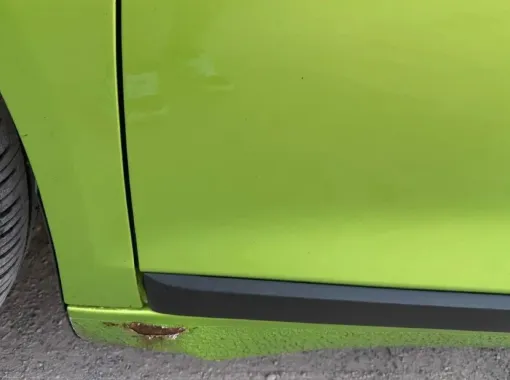
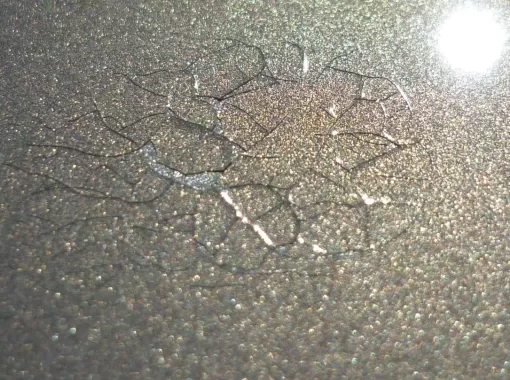
If adhesion is disrupted, corrosion residues are present, or the protective layer thickness is insufficient, corrosion processes can develop under the coating. As a result, damage to the system begins regardless of how expensive and technologically advanced the finish enamel is.
This is one of the key principles of industrial painting:
The properties of the most expensive layer do not automatically make the entire coating system durable.
The Primer Layer Works Directly at the Boundary with the Metal
For a primer, it is fundamentally important how it interacts with the prepared substrate.
The result is influenced by:
- the degree of metal cleaning;
- removal of corrosion products;
- absence of oils, salts, and other contaminants;
- surface roughness;
- adhesion;
- compatibility with subsequent layers;
- dry film thickness;
- application and coating formation conditions.
Depending on the purpose, anticorrosion pigments, fillers, and functional additives may be introduced into primer materials.
Therefore, savings on the primer material must be evaluated not by its price per kilogram, but by whether the system maintains the required level of protection under the specified operating conditions.
But the Most Expensive Primer Is Also Not Always the Best Solution
The opposite approach — choosing the most expensive primer for any object — is also technologically unjustified.
If a structure operates under moderate conditions, service life requirements are low, and the selected system provides the necessary adhesion and substrate protection, using a material with characteristics substantially exceeding the task requirements may not produce an economic effect.
An industrial coating must correspond to the object.
The system for equipment inside a dry room, agricultural machinery operated outdoors, and a metal structure in an aggressive industrial environment will have different requirements.
Therefore, the correct selection criterion is not “more expensive means better,” but “are the system's characteristics sufficient for the specific operating conditions.”
Solution Options
Start Selection with Operating Conditions
The development of a painting system must begin with an analysis of the object.
It is necessary to consider:
- indoor or outdoor operation;
- duration of moisture exposure;
- atmospheric precipitation;
- temperature fluctuations;
- ultraviolet exposure;
- contact with oils, fuel, and chemicals;
- mechanical and abrasive wear;
- appearance requirements;
- required service life;
- possibility of repair painting.
The higher the operational load, the more important it is to consider the primer and finish layers as a single technological system.
Select Compatible Materials
Even two quality paints taken separately do not necessarily form an optimal system.
It is necessary to consider binder compatibility, intercoat adhesion, recommended intervals between layer applications, drying and polymerization conditions, and the behavior of the coating during further operation.
For one task, a classic scheme may be used:
surface preparation → primer → finish enamel.
In another situation, a primer-enamel for metal becomes a rational solution if the specific material allows the necessary protective and decorative characteristics to be provided with fewer technological operations.
At the same time, primer-enamel cannot be considered simply a “cheap replacement” for a multilayer system. Its use must be justified by the characteristics of the material and the requirements of the specific object.
When It Makes Sense to Invest in the Primer Layer
A more effective primer system is especially important where the coating must provide long-term protection of the metal substrate.
This is typical for:
- metal structures;
- machine tools and industrial equipment;
- special-purpose machinery;
- agricultural machinery;
- trucks and commercial transport;
- elements of transport infrastructure;
- tanks and vessels;
- objects operated outdoors.
Under such conditions, the cost of the primer must be compared with the potential costs of subsequent maintenance of the object.
If a higher-quality primer layer increases the service life of the coating or reduces the likelihood of premature repair, its higher initial cost may be economically justified.
When It Is Rational to Use Primer-Enamel
Primer-enamel allows, under certain technological conditions, the functions of the primer and topcoat layers to be combined.
This may be advisable when it is necessary to:
- reduce the number of operations;
- reduce the duration of painting;
- lower labor costs;
- simplify the technological process;
- reduce equipment downtime.
But the economic effect arises only if the primer-enamel corresponds to the requirements of the object.
Reducing the number of layers is not an advantage in itself. If the selected material does not provide the necessary protection or is unsuitable for the operating conditions, lower initial costs may lead to more expensive repairs later.
Calculate the Cost of the Coating, Not the Price per Kilogram
For an industrial customer, the cost of material per kilogram is far from the only economic indicator.
The final cost of painting is influenced by:
cost of paint and coating materials → consumption per square meter → number of layers → labor costs → application and drying time → quality control → service life → repair cost.
Therefore, a more expensive primer or enamel sometimes proves economically more advantageous than a cheaper material.
For example, if a material allows the required thickness to be obtained with lower consumption, reduces the number of operations, or increases the repair interval, the initial price per kilogram ceases to be the main indicator.
Conversely, a cheap material may prove to be an expensive solution if repainting is required after a short period.
Evaluate Life Cycle Cost
For critical industrial objects, it is useful to consider not only the initial cost of painting but also the life cycle cost of the coating.
Simplified, it includes:
initial painting → operation → maintenance → repair → repainting → equipment downtime.
That is why, when choosing between two systems, it is necessary to consider not only the initial budget but also the expected service life of the coating.
If a more expensive system increases the time until the next repair, its use may prove more advantageous in the long term.
This is especially noticeable at objects with a high cost of downtime: production equipment, special-purpose machinery, vehicles, large metal structures, and tank facilities.
Do Not Save on Surface Preparation
Even a correctly selected primer cannot compensate for unsatisfactory metal preparation.
Residues of rust, oil, salts, dust, and other contaminants can reduce the adhesion of the coating and create conditions for corrosion development under the film.
Therefore, the sequence of the technological process is of fundamental importance:
surface preparation → application of the primer layer → holding time → application of the finish coating → thickness and quality control.
If the first stage is violated, increasing the cost of subsequent materials does not guarantee an increase in coating service life.
Results and Conclusions
Buying the most expensive primer just because it is more expensive makes no sense. But saving on the primer layer in the hope that its shortcomings will be compensated for by an expensive enamel is also a technologically incorrect approach.
A primer and an enamel perform different functions, so their effectiveness must be evaluated as part of a single system.
The primer layer works directly with the metal substrate, provides the necessary conditions for the formation of subsequent layers, and, depending on its composition, participates in anticorrosion protection. The finish enamel forms the outer layer and is responsible for the set of operational characteristics of the surface.
At the same time, the final service life is determined by a combination of factors:
metal preparation + properties of the primer layer + material compatibility + coating thickness + application technology + properties of the finish layer + operating conditions.
Therefore, when choosing an industrial paint and coating material, it is rational to compare not individual products by price per kilogram, but ready-made technological solutions and their economics over the entire service life.
Under some conditions, a multilayer system with a primer and finish enamel will be optimal. Under others, a primer-enamel for metal, which allows the number of technological operations to be reduced without lowering the required level of protection.
The main selection criterion is not the maximum cost of each component, but the correspondence of the system to the real requirements of the object, the stability of the technology, and the cost of coating ownership over the entire life cycle.
It is precisely this approach that makes it possible to simultaneously control the quality of industrial painting, the service life of the protective coating, and the economic efficiency of the solution.