Coatings for Nuclear Power Plants: Anticorrosion Protection, Radiation Resistance, and Decontamination
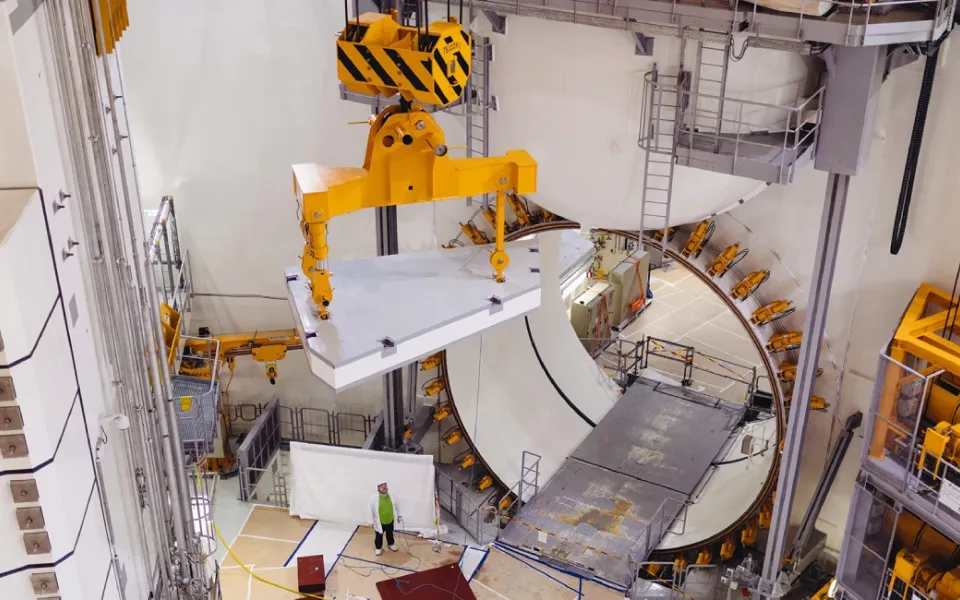
A paint and varnish coating at a nuclear energy facility solves a much wider range of tasks than ordinary protection of metal from corrosion.
Depending on the purpose of the room and equipment, the coating may be exposed to moisture, temperature, process solutions, washing and decontamination compounds, mechanical loads, and ionizing radiation.
Moreover, in certain areas of an NPP, the coating surface must ensure the possibility of effective removal of radioactive contamination.
Therefore, when selecting paint and coating materials for nuclear energy, it is not enough to focus only on characteristics such as anticorrosion or chemical resistance. For the relevant areas of application, a complex of coating properties is evaluated: adhesion, physical and mechanical strength, chemical and radiation resistance, resistance to decontamination compounds, decontaminability, and preservation of performance characteristics after exposure to the specified factors.
GOST R 51102-97 directly applies to protective polymer decontaminable coatings intended, in particular, for surfaces of rooms and auxiliary equipment in the strict regime zone of an NPP.
Therefore, a coating for a nuclear facility should be considered not simply as a paint and varnish material, but as part of a technological surface protection system, whose characteristics must correspond to the conditions of a specific zone.
What Tasks Coatings at NPPs Solve
Anticorrosion Protection
One of the basic tasks remains protection of the metal substrate from corrosion.
Corrosion destruction of equipment and metal structures leads to deterioration of the surface condition, complicates maintenance, and can reduce the service life of structures.
For this purpose, primer, intermediate, and finish coatings are used, forming a multilayer protection system.
However, at a nuclear facility, anticorrosion protection is only one component of the requirements.
For certain zones, it is additionally necessary to take into account exposure to:
- water and condensate;
- process solutions;
- elevated temperature;
- decontamination compounds;
- ionizing radiation;
- mechanical loads.
Why One Coating System Cannot Be Used for the Entire NPP
A nuclear power plant includes many rooms and process zones with different operating conditions.
An external metal structure operates mainly under atmospheric exposure.
In a process room, elevated humidity, chemically active substances, and regular washing may be present.
In an area of possible radioactive contamination, the task of subsequent surface decontamination additionally arises.
Therefore, the selection principle should be as follows:
operating conditions → surface requirements → coating system characteristics → confirmation of conformity.
There is no universal “paint for NPPs” equally suitable for all structures and rooms.
Decontaminable Coatings
Why Coating Decontaminability Is Needed
In rooms where there is a probability of radioactive contamination of the surface, not only the resistance of the paint coating itself is important.
Equally important is how effectively contamination can be removed during decontamination measures.
A dense, nonporous, and chemically resistant surface prevents deep penetration of contaminants into the coating and allows contamination to be removed from the surface without destroying the protective layer.
This has direct significance for facility operation.
The more effective decontamination is, the lower the residual surface contamination after treatment and the less need for repeated cleaning cycles.
What the Decontamination Coefficient Is
The decontamination coefficient is one of the standardized indicators of decontaminable polymer coatings.
According to GOST R 53371-2009, it is defined as the ratio of the level of radioactive contamination of a sample before decontamination to the level of contamination after decontamination. That is, the higher the resulting coefficient, the more effectively radioactive contamination has been removed.
Conventionally, this can be represented as follows:
Kd = contamination level before decontamination / contamination level after decontamination.
For example, a coefficient of 20 means that after decontamination according to the prescribed method, the contamination level decreased by a factor of 20.
That is why, in the context of decontaminable coatings, it is correct to speak of the need for a sufficiently high decontamination coefficient, and not of a “low coefficient as an advantage.”
The method for determining this indicator involves measuring radioactive contamination before and after treatment; the “contamination—decontamination” cycle for samples is repeated three times.
High Decontamination Coefficient — Why It Is Important
For a coating operated under conditions of possible radioactive contamination, a high decontamination coefficient means the ability of the surface to effectively free itself from contamination during the prescribed cleaning procedure.
GOST R 51102-97 establishes minimum values of this indicator for various categories of rooms. In particular, for β-emitting nuclides Ce-144 and Cs-137, the requirements differ depending on the category of the room.
This is a fundamentally important point: the decontamination coefficient is not simply a characteristic of “paint quality.”
It characterizes the behavior of a specific coating under a specific test procedure and must be considered together with other operational indicators.
What Affects Coating Decontaminability
High decontamination efficiency is not related to a single material parameter.
In practice, the following are of great importance:
- structure of the polymer film;
- porosity;
- roughness;
- presence of microdefects;
- chemical resistance;
- adhesion to the substrate;
- resistance to decontamination solutions;
- preservation of integrity after repeated treatment.
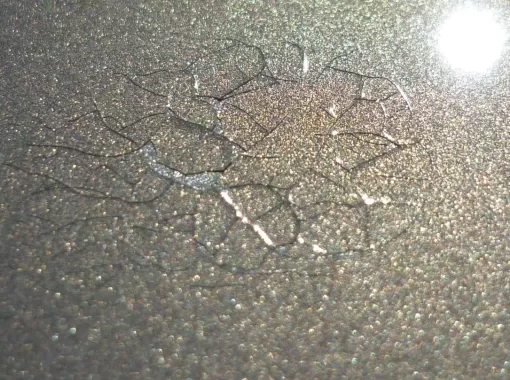
If the surface has pores, cracks, or areas of destruction, contamination can become fixed much more strongly.
Therefore, a decontaminable coating must retain its properties not only immediately after application, but also after the prescribed operational exposure.
Resistance to Decontamination Compounds
Effective decontamination is impossible without chemical resistance of the coating.
During cleaning, special solutions act on the surface. The coating must not be destroyed, softened, peeled off, or lose its protective properties.
For coatings used at NPPs, regulatory requirements provide for tests on exposure to appropriate decontamination formulations and other factors.
For NPP coatings with VVER reactors, for example, GOST R 51102-97 provides for additional exposure to a solution containing boric acid, potassium hydroxide, and hydrazine hydrate.
This clearly shows why the general wording “chemically resistant enamel” is insufficient to assess the suitability of a material.
It is necessary to understand to which specific media and under which conditions the coating retains its characteristics.
Radiation Resistance of the Coating
Radiation resistance is a separate indicator that must be considered in relation to a specific operating zone.
Ionizing radiation is capable of gradually changing the properties of polymer materials.
Depending on the coating composition and exposure level, the following may change:
- appearance;
- elasticity;
- strength;
- adhesion;
- chemical resistance;
- ability of the coating to maintain integrity.
Therefore, for materials operating under relevant conditions, preservation of performance characteristics after exposure to a specified radiation dose is evaluated.
At the same time, radiation resistance and decontaminability are different characteristics.
A coating may be resistant to radiation exposure but not sufficiently effective at removing radioactive contamination. Conversely, good decontamination properties by themselves do not mean unlimited radiation resistance.
Chemical Resistance
For nuclear facilities, chemical resistance may have several aspects.
The coating must withstand exposure to specific process media, water, washing and decontamination solutions within the prescribed operating conditions.
At the same time, it is not abstract “chemical resistance” that is evaluated, but the behavior of the coating in a specific medium.
The result is influenced by:
- concentration of the substance;
- temperature;
- duration of exposure;
- frequency of contact;
- condition of the coating;
- thickness of the system.
Therefore, when selecting a material, it is necessary to compare actual operating conditions with test data for the specific paint and coating material.
Temperature Resistance
Temperature directly affects the durability of a polymer coating.
For equipment and pipelines, it is necessary to take into account specifically the surface temperature, which may differ significantly from the ambient air temperature.
It is necessary to determine:
- constant working temperature;
- maximum temperature;
- duration of exposure;
- presence of temperature cycles.
Elevated temperature can accelerate aging of the binder and change the physical and mechanical characteristics of the film.
Therefore, the operating temperature range must be provided for by the technical characteristics of the selected system.
Surface Preparation
Even a specialized coating for a nuclear facility cannot provide the design service life if the substrate condition is unsatisfactory.
Before application, it is necessary to remove:
- corrosion products;
- mill scale;
- oils;
- salts;
- dust;
- old loosely bonded coatings;
- other contaminants.
Particular attention is paid to welded joints, edges, joints, and hard-to-reach areas.
The quality of preparation directly affects adhesion and durability of the system.
Coating System: Primer, Intermediate Layer, and Finish Enamel
For critical metal structures, the coating should be considered as a single system.
Primer Layer
Forms the basis of the system and provides the necessary characteristics at the boundary with the metal substrate.
Intermediate Layer
If necessary, increases the total thickness and allows additional protective characteristics to be formed.
Finish Layer
Forms the surface that directly receives exposure from the environment, process solutions, and operational factors.
For decontaminable coatings, the quality of the surface layer is of particular importance: its integrity, smoothness, chemical resistance, and ability to retain properties after decontamination.
Epoxy and Polyurethane Systems
Epoxy coatings are widely used in industrial anticorrosion protection due to their adhesion and chemical resistance.
Polyurethane materials can be used as finish layers when both protective and decorative characteristics are required.
However, the chemical nature of the binder by itself does not determine the suitability of the material for a specific NPP zone.
It is impossible to conclude:
“This is an epoxy system, therefore it is suitable for a nuclear facility.”
Or:
“This is polyurethane, therefore it is resistant to radiation and decontamination.”
For critical applications, what matters is the specific formulation, coating system, operating conditions, and confirmed test results.
Coating Quality Control
For coatings at nuclear facilities, reproducibility of technology is especially important.
The following can be controlled:
- condition and degree of surface preparation;
- roughness;
- substrate temperature;
- humidity;
- thickness of each layer;
- interlayer holding time;
- drying or polymerization conditions;
- final thickness;
- adhesion;
- presence of defects;
- continuity of the coating.
For decontaminable coatings, indicators provided for by regulatory documentation are additionally evaluated, including the decontamination coefficient and resistance to decontamination formulations. GOST R 53371-2009 establishes the method for determining the decontamination coefficient specifically on the basis of measuring radioactive contamination before and after decontamination.
Typical Mistakes When Selecting a Coating
Focusing Only on Anticorrosion Properties
For nuclear energy, this is insufficient.
Depending on the zone, confirmed characteristics for decontamination, chemical, temperature, and radiation resistance may be required.
Confusing Radiation Resistance and Decontaminability
These are different properties.
The first characterizes preservation of coating characteristics under radiation exposure.
The second is the effectiveness of removing radioactive contamination from the surface.
Selecting a Material Only by Binder Type
Epoxy, polyurethane, or another binder by itself does not confirm the suitability of a specific paint and coating material for use at an NPP.
Ignoring the Surface
A decontaminable coating must form an integral surface. Pores, cracks, uncoated areas, and peeling can significantly worsen operational characteristics.
Lack of Confirmed Tests
For critical applications, a manufacturer’s statement that the material is “suitable for NPPs” is insufficient.
It is necessary to compare the material characteristics with the requirements of the specific project and regulatory documentation.
How to Select a Coating for a Nuclear Power Plant
The selection of a system must begin with determining the operating conditions.
| Parameter | What must be determined |
|---|---|
| Application zone | Serviced, periodically serviced, non-serviced, etc. |
| Substrate | Steel, equipment, metal structure |
| Temperature | Working and maximum |
| Humidity | Constant, periodic, presence of condensate |
| Chemical environment | Composition, concentration, temperature |
| Decontamination | Necessity and formulations used |
| Radioactive contamination | Type and nature of possible exposure |
| Radiation load | Level and duration |
| Mechanical load | Impacts, abrasion, vibration |
| Required thickness | Thickness of each layer and system |
| Service life | Required resource |
| Application method | Airless, pneumatic, manual |
| Control | Requirements for tests and acceptance |
Only after analyzing these parameters can a specific paint and coating material system be correctly selected.
Results and Conclusions
Coatings for nuclear power plants cannot be selected on the principle “the most expensive enamel is the most reliable.”
For each zone, its own set of requirements is determined.
If the main task is atmospheric anticorrosion protection, the system must provide the necessary resistance to environmental exposure.
If the coating is operated in an area of possible radioactive contamination, decontaminability and the decontamination coefficient additionally become important.
If the material is exposed to ionizing radiation, its radiation resistance is evaluated.
If the surface is regularly treated with chemical solutions, confirmation of resistance to the corresponding decontamination and process media is necessary.
Thus, for nuclear energy it is necessary to distinguish at least three interrelated but different characteristics:
anticorrosion resistance → radiation resistance → decontaminability.
At the same time, a high decontamination coefficient is an advantage specifically in the context of effective removal of radioactive contamination: the regulatory method defines it through the ratio of contamination before and after treatment.
The main selection principle remains unchanged:
operating conditions → coating requirements → confirmed characteristics → application technology → quality control.
For nuclear energy facilities, it is especially important that the declared properties of the material be confirmed by appropriate tests and documentation. GOST R 51102-97 establishes a set of requirements for decontaminable polymer coatings, including decontamination indicators, resistance to decontamination formulations, physical and mechanical characteristics, and radiation resistance.
That is why an industrial coating at an NPP should be considered not as an ordinary paint and varnish material, but as a technological system whose characteristics must be coordinated with the specific operating conditions and requirements of the facility.