Can Primer Be Applied Over Paint? Compatibility of Old and New Coating Layers
Can Primer Be Applied Over Paint? Compatibility of Old and New Coating Layers
If you have ever faced the task of repairing an old coating or repainting a product, you have probably wondered: is it permissible to apply a primer over old paint?
Applying a primer over an old paint and varnish coating (PVC) during repairs is permissible, and in some cases technologically necessary, provided two conditions are met: the old layer has retained strong adhesion to the substrate, and the components of the new primer are chemically and physically compatible with the existing coating.
Compatibility of paint and varnish materials is the ability to form a single multilayer system in which the layers do not conflict during application and curing, preserving protective and decorative properties.
1. Assessing the Condition of the Old Coating
The old coating must be completely removed if the following are detected:
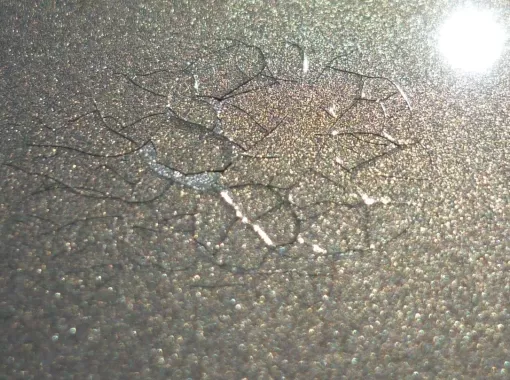
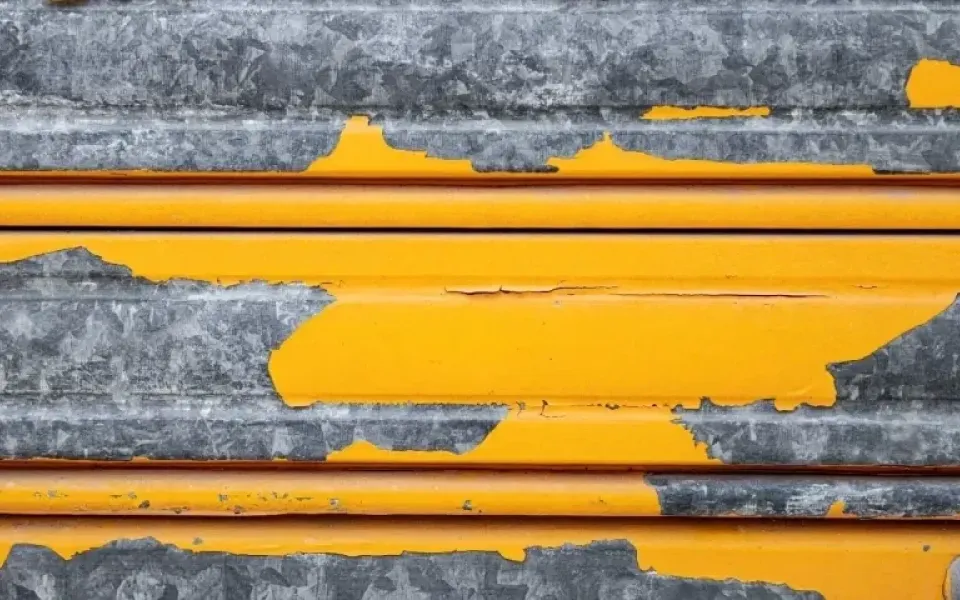
- Loss of continuity: blistering, bubbles, deep cracks, flaking, and peeling edges.
- Deep binder degradation (severe chalking): destruction of the film under the influence of ultraviolet light, when the pigment crumbles throughout the entire thickness of the layer (surface chalking can be removed by sanding and washing).
- Signs of underfilm corrosion or biological damage: blistering of paint on metal due to rust, or darkening and rotting of wood under the film.
- Low adhesion to the substrate: testing is performed using the cross-cut method according to GOST 31149 (ISO 2409) or GOST 15140 (for thick-film systems over 200–250 µm — using the X-cut method according to GOST 32702.2). If more than 5% of the squares are removed when peeling off the adhesive tape (rating 2 or higher according to ISO 2409 / GOST 15140), the coating is unsuitable for repainting: the shrinkage stresses of the new primer will tear off the weakened layer.
If the old paint holds monolithically, does not crumble, and has only localized scuffs or fading, it is left as a base layer for the repair system.
2. Physicochemical Compatibility of Different Types of Coatings
In repair painting, compatibility is determined not by the name of the material on the can, but by the type of film-former (according to GOST 9825), the nature of the solvents, and the curing mechanism of both layers.
Four key mechanisms of interaction and conflict:
- Application of physically drying materials (NC, PVC, vinyl copolymers, acrylics) over oxidative coatings (alkyds, oil paints, urethane-alkyds).
Nitrocellulose, chlorinated polyvinyl chloride, and solvent-borne acrylic primers contain strong polar and aromatic solvents (acetone, butyl acetate, xylene, toluene, and blended solvents based on them, such as R-4 or R-646). Oil and alkyd paints cure through oxidation by atmospheric oxygen and form a relatively loose three-dimensional network. Upon contact with active solvents, this network does not dissolve, but swells sharply and increases in volume. The resulting internal stresses lead to wrinkling and blistering of the old paint ("lifting"). - Application of two-component systems (2K EP, 2K PU) over single-component coatings.
Two-component epoxy and polyurethane primers contain aromatic hydrocarbons, alcohols, and esters, and during chemical cross-linking with a hardener, they develop significant shrinkage stresses. When applied over old oxidative films (alkyds, oil paints), there is a high risk of swelling or mechanical detachment from the substrate due to contraction of the rigid polymerizing film. When applied over 1K physically drying coatings (e.g., acrylics or vinyl copolymers), slight redissolving of the top microlayer can ensure good adhesion; however, an excess of active solvents or excessive wet film thickness can dissolve and deform the lower layer (especially in the case of nitrocellulose coatings).
Technological exception: in industrial painting, overcoating old alkyd systems with two-component materials is not recommended, but in certain cases, it is permissible on fully polymerized coatings (aged 1–2 years or more) when using 2K primers with high solids content and reduced active solvent content (for example, High Solid epoxy systems). The decision is made strictly after a test patch. - Reversibility of physically drying coatings.
Films based on nitrocellulose (NC), vinyl copolymers, solvent-borne acrylates (AK), and rubbers are thermoplastic and reversible: they do not form an insoluble network and return to a solution upon contact with their "own" solvent. When a related composition is applied, the top layer of the old paint partially dissolves, resulting in mutual diffusion of polymer macromolecules and "fusing" of the layers (autohesion). However, excessive wet film thickness or an overly aggressive solvent causes dissolution and shrinkage of the underlying layer. - Cross-linked 2K coatings and the recoat window.
Two-component epoxy and polyurethane coatings after full curing possess high chemical resistance and dense cross-linking. Within the technological "recoat window" (while the reaction of functional groups is still incomplete), the layers bond chemically without sanding. Once this interval expires, the solvents of the new primer are no longer able to soften the surface, and adhesion is achieved primarily through mechanical interlocking with the microprofile (scratch pattern) created by abrasive treatment.
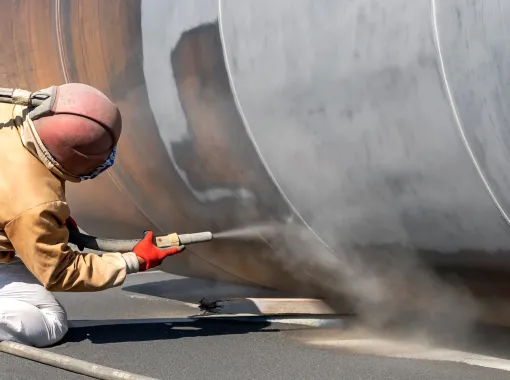
For epoxy materials, this parameter is particularly critical. Epoxies (especially those with cycloaliphatic and phenalkamine hardeners) rapidly gain cross-link density, and under sunlight, they additionally undergo UV chalking, which drastically shortens the recoat window (sometimes to 24–72 hours). If the interval is missed, the solvents of the new primer will no longer soften the surface, and a chemical bond between the layers will not form. Application without prior full matting (sanding or abrasive sweep blasting) in this case will lead to delamination.
Note: special epoxy primers with an extended recoat window (up to several months, most often based on polyamide or modified systems) are available, but even for them, checking cleanliness and the absence of chalking before applying the next layer is mandatory.

3. How to Identify the Type of Old Paint
If documentation from the previous repair is unavailable, the chemical type of the old coating is determined by a sequential solvent rub test (swab test). A cotton pad soaked in a control solvent is applied to a cleaned area, covered with polyethylene film to prevent evaporation, and left for 10–15 minutes:
- White spirit or mineral spirits (nefras): softening of the film, tackiness, or pigment pickup indicates a fresh (underpolymerized) oil or alkyd coating, or a bitumen-resin composition (e.g., BT-177). Aged, well-cured alkyds practically do not react to white spirit.
- Xylene or petroleum solvent:
- swelling and wrinkling of the film without complete dissolution is characteristic of aged alkyd and urethane-alkyd coatings;
- dissolution with pigment transfer onto the swab indicates vinyl, solvent-borne acrylic, or rubber-based coatings.
- Acetone, butyl acetate, or blended solvent R-646: rapid dissolution of the film (in the absence of full solubility in pure xylene) confirms the presence of a coating based on nitrocellulose or certain epoxy-ester formulations.
- No reaction to R-646 and acetone after a 15-minute exposure: a two-component coating with dense chemical cross-linking (2K epoxy, 2K polyurethane) or a stoving enamel (melamine-alkyd, powder coating) is applied to the surface. Note: undercured or modified 2K systems may show slight softening of the top layer without dissolving it.
4. Surface Preparation Technology Before Priming
On old polymerized coatings, intercoat adhesion is achieved mainly through mechanical interlocking with the surface roughness. Even with complete chemical compatibility, the primer will peel off if applied over a smooth, chalking, or contaminated layer.
- Cleaning and degreasing.
Remove dust, oil, and grease contaminants. For washing, use aqueous alkaline detergents (followed by mandatory rinsing with clean water and drying) or specialized degreasers; organic solvents (white spirit, mineral spirits, etc., depending on the type of old coating) that do not dissolve the old paint may also be used. For porous substrates (wood, concrete), checking residual moisture after water cleaning is mandatory, especially before applying solvent-borne primers. Do not sand the surface before degreasing — the abrasive will grind contaminants into the film structure. - Feather-edging transitions.
The edges of areas where the old paint has peeled and been removed down to the substrate are feathered by sanding (at an angle of 15–30° with a transition width of 20–30 mm). A smooth transition eliminates the step and prevents lifting of the old layer's edges as the primer shrinks. - Full matting (sanding).
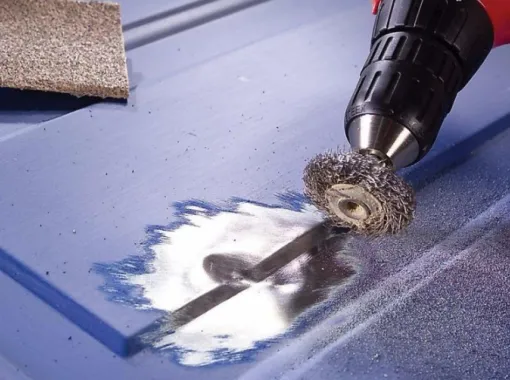
A glossy or slightly chalking surface must be matted to remove the degraded top layer and create a profile for mechanical adhesion. Abrasive grit is selected depending on the type of structure and the thickness of the primer to be applied:- P80–P150 — for metal structures in industrial anti-corrosion protection under thick-film primers (100–250 µm) and when refurbishing old epoxy/polyurethane coatings;
- P150–P220 — for standard industrial and repair primers with a thickness of 60–100 µm;
- P240–P320 — only for thin-film decorative and automotive refinish systems (40–60 µm) under glossy topcoats.
- Dedusting.
After sanding, the surface is thoroughly cleaned with an industrial vacuum cleaner or blown off with compressed air. Otherwise, remaining fine dust will act as a release layer and significantly impair adhesion. - Test patch.
Apply the selected primer to a trial area covering the "substrate — old paint" transition zone. Evaluate the result in two stages:- after 1–2 hours (and again after 24 hours for 2K materials), make sure the old coating has not lifted (blistered or wrinkled) due to solvents and shrinkage;
- after reaching polymerization strength ( for 2K systems — no earlier than after 3–5 days at +20 °C, in accordance with the material's TDS), check intercoat adhesion using the cross-cut test according to GOST 31149 (ISO 2409). If there is no flaking (rating 0–1), the system can be applied across the entire area.